Twiq - Anonymous Chat
- 3.6
- Rating
- 500.00K
- Installs
- Free
- Price

 Analysis by App-foxy
I tried Twiq - Anonymous Chat as a communication app built around meeting people, starting private conversations, and potentially turning a quick exchange into a genuine friendship. My first impression was that it aims for a more spontaneous experience than the messaging tools most of us already use. Instead of beginning with people I already know, the app puts the focus on discovering new contacts and chatting across borders.
That sounds appealing when I want a low-pressure conversation, a different cultural perspective, or simply a break from the same familiar social feeds. It also creates a responsibility that ordinary messaging apps do not always carry: I need to be more careful about who I trust, what I share, and how quickly I move a conversation elsewhere. Twiq is free to install, developed by Voletius Ltd, and intended for mature users aged 17 and over. Those details matter because the experience is social rather than purely practical, and the quality of a session depends heavily on the people I encounter.
How Twiq feels in its current form
The central appeal is immediacy. I can approach the app with a simple goal—meet someone new and start talking—without first building a carefully edited public profile or importing an existing contact list. That makes it useful for short conversations during a commute, a quiet evening, or a moment when I want interaction without committing to a large online community.
You May Also Like

 Blood Strike: 2.5 Anniversary
Blood Strike’s Loadouts Turn Every Drop Into a Tactical Gamble
A close look at Blood Strike’s custom loadouts: how fast access to signature weapons reshapes its battle royale rhythm, rewards preparation, and narrows the gap between fights.

 Pandora - Music & Podcasts
Pandora’s Music Is Easy to Start, but Harder to Recover
Pandora’s strength is its low-effort path from a seed to a station. Its weak spot is how much confidence it asks you to place in connection, setup, and quiet recovery.

 8 Ball Pool
 Is Built on Rivalries, Rematches, and Routine
A close look at the rivalries, rematches, shared routines, and unanswered safety questions that turn a quick pool match into a persistent mobile community.

 Samsung Music
’s Quiet Strength Is Playing What You Already Own
Its reach comes less from spectacle than from dependable access to a personal library. That simplicity is both the app’s strongest retention engine and its ceiling.

 AccuWeather: Weather Radar
AccuWeather Review: A Quick, Clear Forecast for Everyday Decisions
For everyday plans, the best forecast is the one you can understand quickly. AccuWeather makes rain timing, radar, and local conditions easy to act on, with a few trade-offs.

 Hill Climb Racing
Why Hill Climb Racing Still Turns Crashes Into One More Run
A tiny car, a bumpy hill and one more upgrade: Hill Climb Racing keeps resurfacing because its simple chaos makes every near-miss feel personal.
More From Our News Desk



In practice, I found the best results came from treating the opening message as a filter rather than a formality. A vague “hi” leaves the other person with very little to respond to, while a question about music, films, travel, language, or everyday routines gives the conversation somewhere to go. This is one of the less obvious realities of the app: the service can provide access to new people, but I still have to supply the curiosity and effort that make a chat worthwhile.
The worldwide focus is another meaningful part of the experience. Twiq is not only competing with conventional text messaging; it is also offering a way to cross the social boundaries of my existing circles. That can make a conversation feel fresh, but it can also produce mismatched expectations. Someone looking for a casual exchange may meet another person hoping for a close friendship, and neither intention is automatically visible at the beginning.
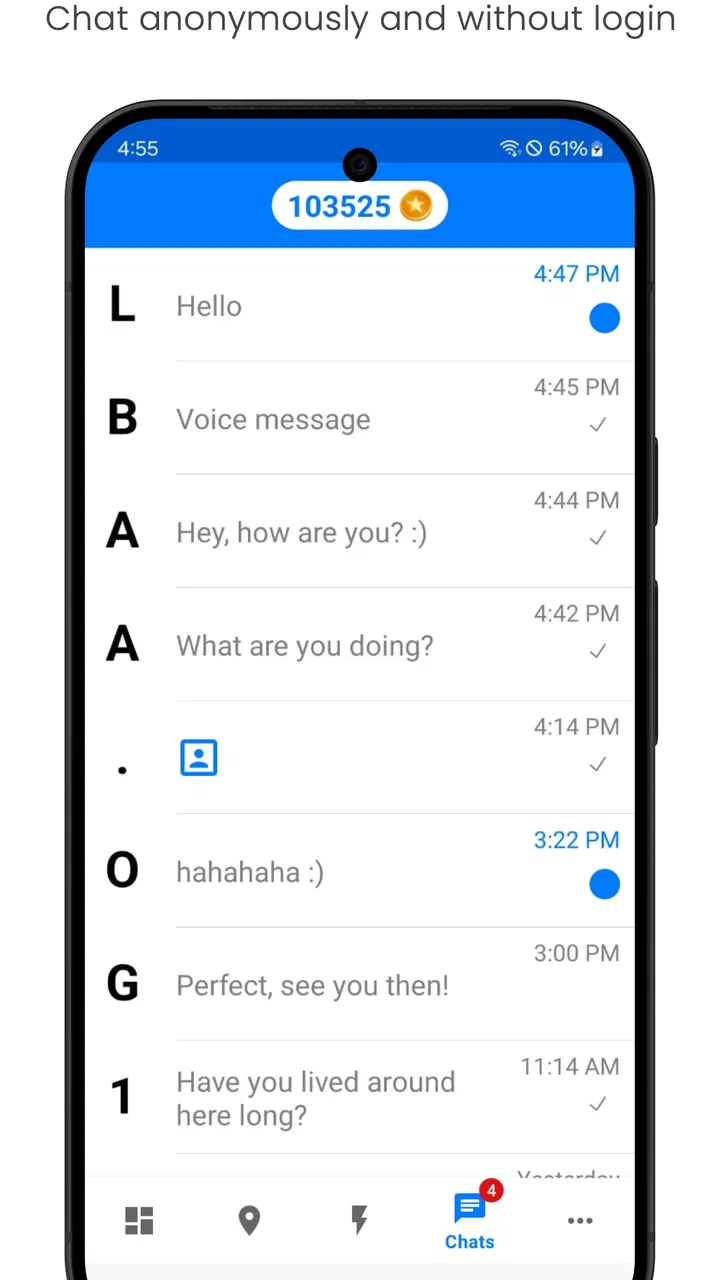
I would describe the interface experience as conversation-led rather than productivity-led. I would not choose this app to organize work discussions, manage a group project, or keep a dependable archive of important messages. Its value is closer to opening a door to an unfamiliar conversation. That distinction helps set expectations before installation.
Who gets the most from it
Twiq is a reasonable fit for people who enjoy meeting strangers, practicing relaxed conversation, or learning how people in other places spend their time. It may also suit someone who finds large public social networks exhausting but still wants one-to-one interaction. The private-chat emphasis can feel less noisy than a feed full of public posts, especially when I want to focus on one person at a time.
It is less suitable for anyone who needs a formal identity check, a professional networking environment, or a guaranteed way to find people with the same intentions. It is also a poor choice for users who dislike uncertainty in online social spaces. The app can introduce me to people, but it cannot remove the normal risks of anonymous or semi-anonymous communication.
For younger users, the mature age classification is an important boundary rather than a minor label. Parents and guardians should not treat the app as a general-purpose children’s messenger. For adults, the same rating is a reminder to use ordinary online-safety habits: avoid sharing an address or workplace details too soon, be cautious with requests for money or private images, and end a conversation immediately when it becomes manipulative.
A realistic everyday session
Imagine I have twenty minutes before an appointment. I open Twiq expecting a quick exchange rather than a long-term commitment. I find someone who mentions enjoying a familiar hobby, ask what first got them interested, and discover that we approach it differently. The conversation becomes enjoyable because the subject gives us a shared starting point without requiring either of us to reveal personal information.
If the exchange remains comfortable, I can continue it another day. If it becomes repetitive, intrusive, or uncomfortable, I can leave without having invested weeks in a social profile. That low commitment is one of the app’s practical strengths. At the same time, I should not confuse a smooth first conversation with trust. A friendly tone is only an opening signal, not proof of identity or good intentions.
What the version history means for users
The current version is 12.0.1, which tells me the product has moved well beyond an early first release. Twiq originally appeared on July 7, 2020, so existing users have had time to see the service develop rather than remain a one-off experiment. A mature version number does not automatically guarantee a perfect experience, but it does suggest an app that has been maintained through multiple stages of use.
For someone returning after a long break, I would approach the latest version as a reason to reassess the experience instead of assuming it is identical to the first build. Changes in a social app can affect how quickly I discover people, how conversations flow, and how much of the experience feels familiar. I would spend a few minutes checking the current account and chat behavior before deciding whether it still fits the way I want to communicate.
The important distinction is between what is visible now and what I might hope to see next. The version number confirms a continuing product journey, but it does not mean every personal preference has been addressed. I would not install Twiq expecting a particular future feature simply because the app has received many updates. I would judge the present experience first, then treat later improvements as a bonus.
That evolution also affects expectations for new users. An established app can feel more settled than a brand-new chat experiment, yet a social platform’s usefulness still depends on the people active when I open it. Technical maturity and social liveliness are related, but they are not the same thing. A well-maintained app cannot guarantee that every conversation will be interesting.
How it compares with familiar alternatives
Compared with SMS or a standard messenger, Twiq is better when the goal is discovery. Traditional messaging apps are excellent once I already know someone’s phone number or username, but they do not usually help me meet an unknown person with a shared interest. Twiq reverses that starting point: finding a new contact comes before building a conversation.
Compared with large social networks, its private-chat orientation may feel more focused. A public feed gives me more ways to browse and perform an identity, while a direct conversation asks me to participate immediately. I prefer Twiq when I want a personal exchange without scrolling through endless posts. I prefer a conventional social network when I want communities, public discussion, creator content, or a visible history of someone’s interests.
Compared with dating-focused services, Twiq is more appropriate when friendship and conversation are the main objectives. I would not use it as a substitute for a platform whose tools are specifically designed around romantic compatibility, verified profiles, or structured matching. The advantage here is flexibility; the trade-off is that I may need to clarify intentions myself.
Compared with anonymous discussion boards, one-to-one chatting can feel more intimate and less chaotic, but it can also make poor interactions feel more personal. On a public forum, community context may help me judge a comment. In a private exchange, I have less surrounding information. That is why I would keep my first conversations light and avoid moving to another service too quickly.
Costs, account choices, and practical friction
The app is free, which makes trying it relatively easy. There are in-app purchases ranging from $1.99 to $63.99 per item, so I would pay attention to any optional spending before confirming a purchase. My advice is simple: use the free experience long enough to decide whether the conversations themselves are valuable. Paying should solve a clear problem for me, not become an automatic response to an uninteresting session.
This is especially important in a social app because paid options cannot manufacture chemistry. They may make sense only if they provide a function I genuinely understand and expect to use. I would also set a personal spending limit before exploring extras, particularly if I tend to make small purchases impulsively.
The app has an average rating of 3.6 from around 6.8 thousand ratings, with more than 400 written reviews. I read that as a mixed but useful signal: enough people have tried it to form a broad impression, while the score suggests the experience will not be equally satisfying for everyone. I would use those figures as a prompt to test the app for myself, not as a promise of a particular result.
It has passed half a million installs, which gives it a meaningful user base for a service centered on meeting people. Still, install volume is not the same as active availability at the exact moment I want to chat. If I open the app at an inconvenient time or approach conversations with no clear subject, the experience may feel quieter than the overall install figure suggests.
Small habits that improve the experience
My first practical tip is to prepare three neutral opening topics before I begin. I use questions that invite a real answer but do not ask for sensitive information. This reduces the temptation to share too much just to keep a conversation alive and makes it easier to recognize who is willing to engage thoughtfully.
My second tip is to separate friendliness from reliability. I would keep early chats inside the app until the other person’s behavior feels consistent over time. I would avoid sending identifying details, workplace information, financial information, or private images. If someone tries to rush that process, I would treat the pressure itself as useful information and end the exchange.
My third tip is to use short sessions deliberately. Rather than expecting every new contact to become a lasting friend, I would give a conversation ten or fifteen minutes of genuine attention and then decide whether it deserves more. This keeps the app from becoming an obligation and helps me avoid continuing chats only because I feel awkward leaving.
A fourth useful habit is to state my intention early. Saying that I am looking for casual conversation, language practice, or friendship can prevent avoidable misunderstandings. It does not guarantee that another person will respect the boundary, but it gives me a clear reference point when the conversation starts drifting.
I would also keep notifications under control if the app offers frequent chat activity on my device. A communication app can easily turn a pleasant discovery tool into a source of interruption. Checking messages at chosen times works better for me than allowing every new interaction to compete with work, sleep, or time with people I already know.
Where the current experience still falls short
The biggest limitation is not necessarily a missing button; it is the uncertainty built into meeting strangers. The app’s basic promise depends on other users being interesting, respectful, and available. When that combination is absent, the experience can become a sequence of short greetings, mismatched intentions, or conversations that fade without explanation.
That may frustrate users who expect a carefully curated social environment. Twiq gives me an opportunity to discover people, but I still have to perform the selection, filtering, and boundary-setting that a more structured service might handle through profiles or matching tools. The freedom is appealing, yet it places more responsibility on me.
Privacy is another area where I would remain cautious. Anonymous or low-context conversation can feel liberating, but it also limits what I know about the person on the other side. I would not use the app for confidential discussions, sensitive personal advice, or anything that depends on verified identity. A private chat is not automatically a secure or trustworthy relationship.
The mature rating may also narrow the audience for families looking for a general social app. That is not a defect for its intended users, but it is a clear reason to choose another product if supervised youth communication is the goal. Likewise, people who want dependable contact with existing friends will probably be happier with a standard messenger that is built around known connections.
The mixed rating reinforces my cautious view. I can see why the concept appeals to people who want spontaneous global conversation, but I also understand why others may find the results inconsistent. The app’s success is personal and situational: it depends on timing, expectations, communication style, and the quality of the particular people I meet.
What I would watch before committing
If I were deciding whether to keep Twiq installed, I would watch three things during the first few sessions. First, do conversations begin naturally, or do I have to work through too many empty exchanges? Second, do people respect a clear boundary when I say I want casual conversation? Third, does the free experience provide enough value without encouraging spending before I understand the service?
I would also watch how the product continues to evolve after version 12.0.1. Future changes matter most when they improve the practical parts of meeting people: clearer control over conversations, sensible ways to handle unwanted contact, and an experience that remains easy to understand. I would welcome improvements in those areas, but I would not assume they exist until I can use them.
For returning users, the question is whether the current version still supports the reason they joined in the first place. Someone who enjoyed international friendships may value continuity, while someone who disliked repetitive chats may need a different kind of service rather than another update. Product evolution can refine the experience, but it cannot change the basic fact that social discovery is unpredictable.
My final recommendation is therefore selective. I would suggest Twiq to an adult who enjoys spontaneous one-to-one conversations and is comfortable filtering contacts carefully. I would skip it if I needed verified identities, professional communication, a child-friendly environment, or a reliable replacement for messaging people I already know.
After using it, I see the app as a doorway rather than a complete social solution. It can make meeting someone new feel immediate, and its worldwide focus gives ordinary downtime a chance to become an interesting exchange. The best results come from curiosity paired with firm boundaries: start with safe topics, judge behavior over time, spend cautiously, and leave quickly when a conversation feels wrong. With those expectations, Twiq is worth trying for the right kind of user, even though it is not the universal chat app its simple premise might initially suggest.
FAQs for Twiq - Anonymous Chat
01What is Twiq - Anonymous Chat, and how does it work?
Twiq - Anonymous Chat is designed for meeting and talking with other people without immediately revealing your real identity. After installing the app, you can browse available conversations or start chatting through its anonymous social features. The experience generally focuses on quick interactions, casual discussions, and discovering new contacts, although the exact options may depend on your account, location, and the current version of the app.
02Is Twiq - Anonymous Chat completely anonymous and safe to use?
Anonymous does not always mean fully untraceable. Twiq may hide your public identity from other users, but the service can still collect technical, account, or usage information according to its privacy policy. Avoid sharing your real name, address, phone number, passwords, financial details, or private photographs with strangers. Use blocking and reporting tools whenever a conversation becomes uncomfortable, suspicious, or inappropriate.
03Do I need to create an account or provide personal information?
The registration requirements can vary depending on the version of Twiq and the platform you use. You may be asked to create a profile, choose a nickname, or provide limited information to access chat functions and prevent abuse. Before signing up, review the permissions and privacy details carefully. Providing less personal information is usually the safest approach when using an anonymous communication application.
04Is Twiq - Anonymous Chat free, or does it include in-app purchases?
Twiq may be available as a free download, but some features can be restricted behind subscriptions, credits, advertisements, or optional in-app purchases. Pricing and available services may differ between Android and iOS, as well as by country. Check the store listing before downloading and review the payment screen carefully. If the app offers recurring subscriptions, confirm the renewal terms before accepting.
05What should I do if I encounter harassment, scams, or inappropriate content?
Do not continue a conversation that makes you feel threatened, pressured, or uncomfortable. Avoid clicking unknown links, sending money, or sharing personal information. Use Twiq’s report and block functions if they are available, save relevant evidence when appropriate, and contact the platform’s support team. If someone makes credible threats or targets a minor, consider contacting local authorities or a trusted adult immediately.
Pros
- Anonymous conversations can feel safer for sharing personal thoughts.
- Simple interface makes it easy to start chatting quickly.
- Useful for meeting people outside your usual social circle.
- Short-form chats keep interactions casual and low-pressure.
- Available on mobile for convenient conversations on the go.
Cons
- Anonymous accounts can make it harder to judge who is trustworthy.
- Some conversations may be repetitive
- immature
- or poorly moderated.
- You may receive unwanted messages or interactions from strangers.
- Limited identity details can make meaningful connections difficult.
- Privacy policies and data handling should be checked before sharing details.

Twiq - Anonymous Chat
Gallery